
The violence that that the world witnessed in Minneapolis this month, and murders that happened in other cities since Trump resumed his tenure in office, is horrific. But it is not new. Blacks, Latinos, poor Americans have lived in fear of law enforcement for centuries. Mothers and fathers have talked with their children about the possibilities of death by police. They knew that after the killing, law enforcement, and those who oversee them, would often change the narrative to justify the murder. Talking heads referred to Black boys and men as thugs. Now, the phrase “dangerous illegal immigrants” is used as a weapon in much the same way as the Texas government labeled Mexican men “bandits” in the early 1900s.
But again, I stress that the shift in narratives and continued support for police brutality is not new. It is ingrained in the very institutions that claim the mission is to serve and protect. Terror is the point. Both strategies stand out in the historical record when studying the purpose of forming police organizations such as the Texas Rangers and Border Patrol.[1] Under the guise of innocuous language as “protecting the border,” or “protecting the public,” these law enforcement organizations and legislators enact extreme violence on people in order to generate fear and maintain control.
Both the violence and legislative support are evident when examining the life and career of Henry Ransom, Texas Ranger and Special Officer for the city of Houston. Time and time again, Ransom faced murder indictments, chargers of brutality, and each time a jury acquitted him and legislators rehired, promoted, and praised him for a job well done.
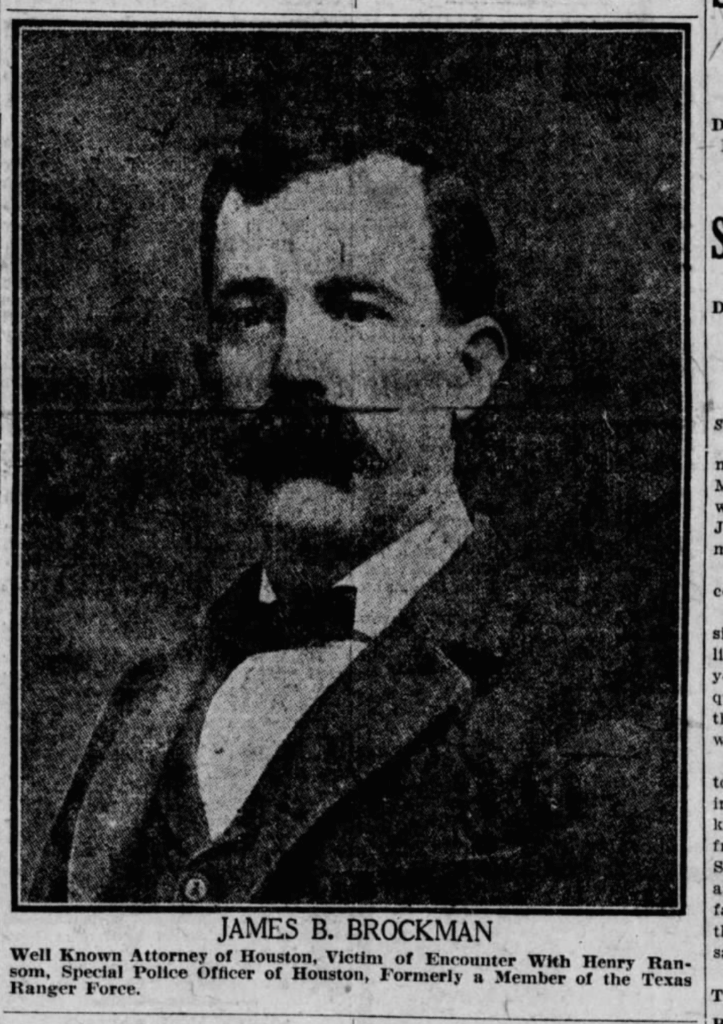
On the night of October 23, 1910, James Brockman, and well-known defense attorney, stood on the corner of Franklin and San Jacinto in Houston, Tx, waiting for a car to pick him up.[2] Brockman went to Galveston earlier in the day to pick up some affidavits, then returned to Houston to work in his office. After he finished his work, he stopped off in the Crown Saloon before his journey home. As he stood at the corner waiting for his car, Special Officer Henry Ransom walked up to him, pulled his gun, and shot Brockman five times. Ransom then left him there to die. Brockman crawled to the entrance of the saloon and told CS Crook, the saloon proprietor, “Ransom shot me.” He then repeated the testimony to Justice McDonald and Sheriff Anderson. Brockman claimed he had a gun in his pocket but did not draw it when Ransom shot him.[3]
Brockman was the attorney for Earl McFarlane, a man accused of murdering the night chief of the Houston Police Department.[4] A month before his death, Brockman questioned Mayor Horace Rice on the stand and grilled him on whether he brought in Ransom and Baker to murder McFarlane if he got out on bond. Mayor Rice denied the accusation, but did say he brought Ransom in on the referral of others to “catch some of the bad men and gun carrying persons in the city.”[5] Whether he understood the implication or not, Mayor Rice was aware of Ransom’s reputation as a lawman who murdered with impunity. Ransom demonstrated this with the execution of Brockman who “insulted him and the mayor” in court.
Henry Ransom understood violence and fear as an effective method of policing. He served in the Philippines Insurrection (1899-1903), where American soldiers were known to torture and then murder prisoners.[6] Then, in 1892, Ransom fought with two Black men, shooting both. A grand jury indicted him for murder, but he was acquitted.[7] He served briefly as a Texas Ranger in 1905 and then again in 1909 before moving to Houston to work for Mayor Rice. After Ransom was indicted and then acquitted of Brockman’s murder in 1910, Mayor Rice appointed him police chief of the Houston Police Department. Understanding the nature of Ransom, the mayor brought in Frank Hamer, of Texas Ranger fame, to try and restrain Ransom’s violence. Hamer did not care for Ransom, even called him a “cold blooded-rattlesnake. One of the most dangerous men he ever knew.” [8] Still, Mayor Rice wanted that kind of brutality to strike fear into the growing populations of Black communities, immigrants, and the poor moving to Houston in search of work.
By 1912, Ransom’s police department faced an onslaught of complaints of police brutality, the majority of those from Black men. Ransom, in that same year, faced another investigation of “savagely beating” a witness in the police station. Under the scrutiny and facing new charges, Ransom resigned his post. Mayor Rice immediately rehired him to his former job as a special officer.
Ransom’s reputation of brutality won him praise from the Texas governor’s office in 1915. Governor James Ferguson appointed Ransom to Company D of the Texas Rangers on July 20, 1915. Ransom once said, “A bad disease calls for a bitter medicine. The governor sent me down there (South Texas) to stop trouble, and I am going to carry out his orders.” Governor Ferguson did tell him to “clean up that nest, even if you have to kill every damned on of them.”[9] Ransom knew he and the other men he recruited could kill without consequence since the governor made it known that “he had pardoning power,” and Ransom would perform exactly the way he wanted, with severe brutality. The men Ransom recruited from Houston had their own history of violence, mostly as prison guards known to shoot inmates in the back with buckshot.
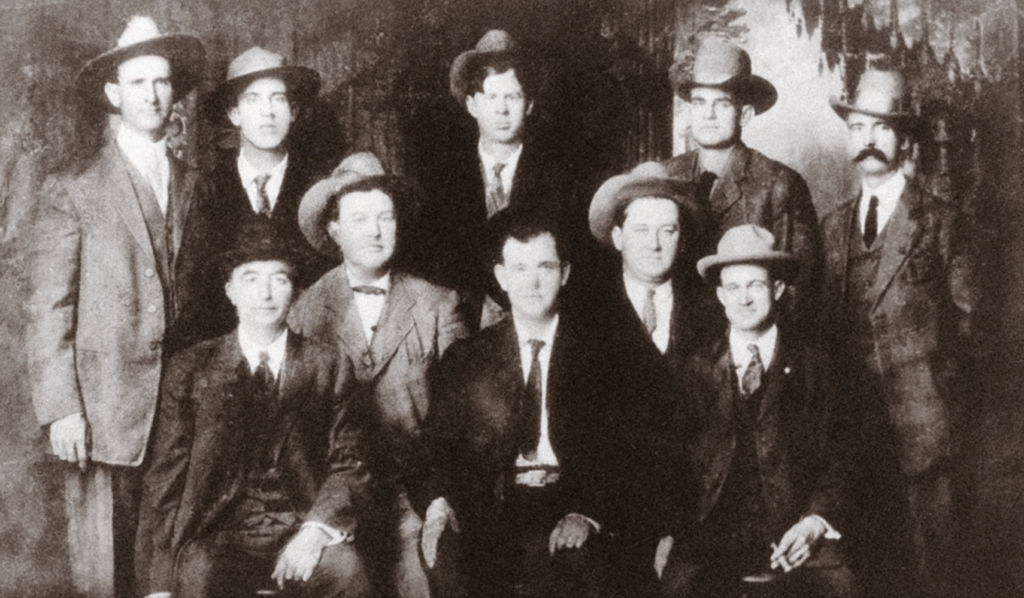
The strategy led to a brutal period know as La Mantanza. Between the time Ransom and his men arrived in South Texas the summer of 1915 and the late fall, over 300 Mexican lost their lives due to Company D, Jesus Bazán and Antonio Longoria among them.
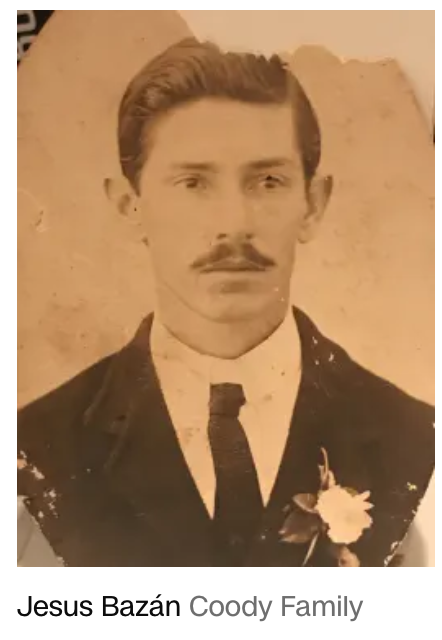
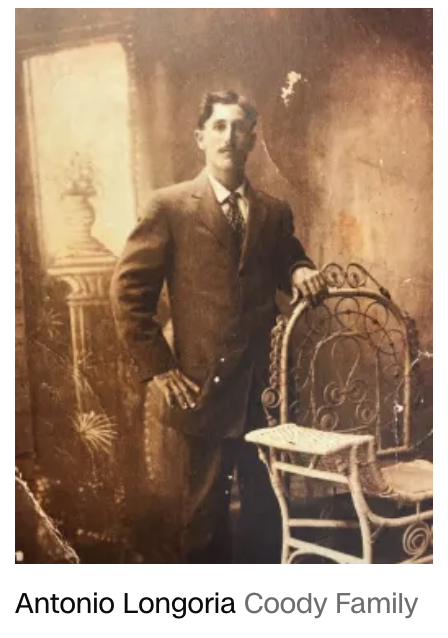
In 1919, JT Canales, the representative from South Texas, called out the “wholesale evaporation of Mexicans” by Ransom and his men. Canales wanted to reorganize the Rangers, while others objected to having on the payroll of the state a body of armed men who may be used for political purposes. But the Rangers continued to be lauded for their methods of brutality as long as they controlled people of color throughout the state.
Ransom continued to face backlash and scrutiny from the public and other law enforcement. The Sheriff of Cameron County did not want Ransom in his region because of his brutal methods. But even then, Ransom never lost his job because he did what the elected officials meant for him to do, carry out orders and use lethal force on anyone who stood in the way of policies of violence. Eventually, Ransom was reassigned to Sweetwater, Texas, where he was shot and killed in a local hotel.
What makes this story both interesting and infuriating is that we can almost copy and paste current names and events into the narrative and see the same results. It is imperative that we keep the history in the public view and remind everyone that we have to play the long game. If Dr. Martin Luther King was right, and the arc of the moral universe is long, but it bends towards justice, we have to see this through.
– Leah LaGrone, PhD
[1] Ben Johnson, Monica Munoz Martinez, Kelly Lytle Hernandez
[2] “Attorney Brockman Dead as a Result of His Wounds” Houston Chronicle, October 26, 1910
[3] “Attorney Brockman Dead as a Result of His Wounds” Houston Chronicle, October 26, 1910
[4] Martin Friedland, The Death of Old Man Rice: A True Story of Criminal Justice in America
[5] “Tilts Between Court and Counsel in McFarlane Case: Mayor on Stand,” Houston Daily Post, September 22, 1910
[6] Robert Utley, Lone Star Lawmen: The Second Century of the Texas Rangers
[7] John Boessenecker, “Texas Ranger: The Epic Life of Frank Hamer , the Man Who Killed Bonnie and Clyde”
[8] John Boessenecker, “Texas Ranger: The Epic Life of Frank Hamer , the Man Who Killed Bonnie and Clyde”
[9] Robert Utley, Lone Star Lawmen: The Second Century of the Texas Rangers